
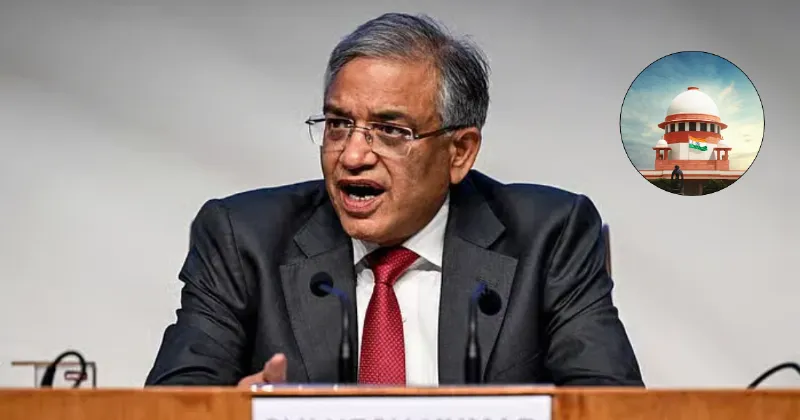
UDF caught in its own trap in its eagerness to trap Gyanesh Kumar
Introductory Memo: The article argues that the current Vigilance investigation involving Chief Election Commissioner Gyanesh Kumar, based on a 2006 suicide connected to the Kerala State Transport Project (KSTP), may have unexpectedly implicated leaders from both the UDF and LDF rather than establishing a clear case against Kumar. It recounts how the MC Road project was approved during M. K. Muneer’s tenure as Public Works Minister, while Thomas Isaac, as Finance Minister in the succeeding LDF government, was responsible for the financial restrictions that allegedly delayed payments to the contractor, Lee See Been, whose suicide note referred to payment-related pressure and an alleged bribe demand. The article notes that earlier Vigilance cases concerning the project had largely been closed and that officials and legal experts had previously indicated that there was insufficient evidence linking Kumar directly to wrongdoing. It therefore portrays the renewed investigation as politically motivated, while suggesting that revisiting a 20-year-old project could create difficulties for former UDF and LDF ministers, particularly Muneer and Isaac, and illustrates how political accusations over development projects can eventually turn back on those who made them.
Analytical view/ Analysis: There are no records to prove Gyanesh kumar’s involvement in corruption. But even though the victim complained him on bribe he didn’t act. Now the focus is directing to the political bosses and former ministers who with held the payment and abetting the suicide of Malasian citizen.
UDF leaders got caught in the trap prepared by the UDF to trap Chief Election Commissioner Gyanesh Kumar over the suicide of a contractor 20 years ago. The LDF too got caught in it. It was Home Minister Ramesh Chennithala who directly announced a Vigilance investigation to trap Gyanesh Kumar again in a Vigilance case that had been written off by the Left Front government. As the details of the case emerged again, instead of Gyanesh Kumar being in the position of the accused, a situation arose in which former UDF minister M K Muneer and Thomas Isaac, the Finance Minister in the subsequent Left Front cabinet, came into the picture.
In the A K Antony cabinet that assumed office in 2001, the Public Works Department was under Muslim League’s M K Muneer. Even when Antony stepped down in 2004 and Oommen Chandy became Chief Minister, Muneer continued to hold the Public Works portfolio. During Muneer’s tenure, the contract to develop the MC Road from Thiruvananthapuram to Angamaly to national highway standards was awarded to a Malaysian company called Pati Bell for Rs 216 crore. For this purpose, a special company called Kerala State Transport Project was formed under the state government. This company was formed after selecting engineers and senior officials from the Public Works Department itself. As the first phase, construction of the road was completed up to Chengannur. While the road work was in progress, in 2005 Thomas Isaac, who was then an opposition MLA, had raised both in the Assembly and outside that Rs 1.25 crore was being spent to construct one kilometre of road. In the election held before the second phase began, Oommen Chandy was voted out and V S Achuthanandan became Chief Minister.
Oommen Chandy stepped down on May 12, 2006. V S Achuthanandan took charge as Chief Minister on May 18. Thomas Isaac was the Finance Minister in that cabinet. Immediately after the new cabinet assumed office, four Vigilance investigations were announced one after another into the KSTP’s MC Road project. The first investigation was into irregularities in awarding consultancy for road construction to a foreign company, excluding Indian firms. A second investigation into defects and irregularities in road construction was announced in 2006 itself. The third investigation was into the valuation of buildings evicted at Kottarakkara Pulamon Junction on the MC Road. The fourth investigation was based on irregularities found during a surprise inspection conducted at the office of Bhageerath Engineering, the company’s partner in Kerala, regarding remuneration. In a reply given in the Assembly in 2010, Kodiyeri Balakrishnan, who was then Home Minister, stated that there had been no significant progress even after four years of investigation.
In November 2006, Ganesh Kumar was removed from the post of Public Works Department Secretary and Mathew C Kunnungal was made Secretary instead. Meanwhile, on November 11, the company’s Chief Project Manager Lee See Been committed suicide. In his suicide note, he stated that the pressure caused by not receiving the money due from Kerala was the reason for the suicide. Out of Rs 216 crore, only Rs 70 crore had been paid to the company. The subcontractors who had carried out work for the company in Kerala were owed Rs 12.5 crore. They had put Been under severe pressure for this money. The government led by V S Achuthanandan had taken the position that payment would be made only after the work was completed. Finance Minister Thomas Isaac and the Finance Department had imposed a ban on paying for the work already completed. In his suicide note, Been said that he was committing suicide because he could not bear the ban on payment and the pressure exerted by subcontractors for money. The suicide note mentioned that he had told Gyanesh Kumar, who was the Public Works Secretary, twice that officials had demanded bribes to release the money. The first phase of the project was supposed to be completed in May 2005. The delay in land acquisition was the reason for the delay in the project.
Meanwhile, an inspection conducted by the Comptroller and Auditor General had found that the project had incurred unnecessary expenditure of Rs 93.7 crore. The Left Front government registered a Vigilance case against M K Muneer, who was the Public Works Minister, but he was later acquitted by the court. The other four cases registered by the Vigilance were also closed without further action. It is these cases that Home Minister Ramesh Chennithala has now ordered to be investigated on the basis that Gyanesh Kumar’s name is mentioned in them. Ramesh Chennithala’s position is that this will help energise the nationwide agitation against the Chief Election Commissioner.
The Vigilance intends to invoke sections against Gyanesh Kumar that could carry a sentence of ten years for abetment of suicide and seven years for corruption. The suicide note contained no other reference to Gyanesh Kumar apart from stating that he had been informed that a bribe had been demanded. At the same time, there is a clear indication regarding the withholding of money. It was Thomas Isaac, who was the Finance Minister in the Left Front cabinet, who withheld the money and created the problems. It was M K Muneer, the UDF minister, who approved the project. Gyanesh Kumar took charge as Public Works Secretary only a short time before Muneer stepped down as minister.
Upendra Varma, who was the Vigilance Director at the time, told the media that there were no references to Gyanesh Kumar in the investigation conducted by the Vigilance. Jacob Punnose, the then Additional DGP in charge of law and order, also clarified that the Malaysian police had not conducted any investigation with the Kerala Police in this regard and that there were no references. Legal experts are of the opinion that the Public Works Secretary cannot be held responsible for bribery in the KSTP, which functioned under the direct charge of the Public Works Minister. Police sources also indicate that the Vigilance investigation against him will not stand in the absence of any complaint against Gyanesh Kumar or any indication in the suicide note. For the time being, this is being viewed only as Ramesh Chennithala’s strategy to gain national attention.
What is now being discussed is the policy of the Left and Right Fronts of making mutual allegations and undermining each other in the name of politics in development works. When Thomas Isaac raised the allegation that Rs 1.25 crore was spent per kilometre, Oommen Chandy, who later became the opposition, had made a reference against Isaac in the Assembly over the payment of more money to the company as remuneration. The Vigilance is trying to find records from 20 years ago and conduct an investigation of some kind. Many of those who were in senior positions at the time and those who were responsible for the files and construction have since died. The then Public Works Minister M K Muneer had been decided by the cabinet meeting to be made Chairman of the Administrative Reforms Commission with cabinet rank. If the Vigilance investigation comes and begins, Muneer too will become an accused. It is doubtful whether he will be able to continue in a post with cabinet rank. This is also being interpreted as a move against the Muslim League, which did not support Ramesh Chennithala for the Chief Minister’s post. The attempts made to trap Gyanesh Kumar have now left the front itself caught in a trap.
Reference
- Onmanorama https://share.google/QCgas7UaIYU0YMm8N
- Onmanorama https://share.google/jFVaETUDRLR00gKuL
- NDTV https://share.google/4VndN3ZZh1MJT6vwV
- The Indian Express https://share.google/6g5vCLC7wkTXyW94h
- Rediff https://share.google/fA2fnbi8dNZBUIfp2
- Republic World https://share.google/6OBQjeihGoOk8MxMb
- The New Indian Express https://share.google/rUcLHgu81FCGzRym8
- Onmanorama https://share.google/XIiR6Bmyki2kK5bQQ
- Onmanorama https://share.google/29W8aeOUP97hkSq5u News at a Glance: Congress lead UDF government re opened the vigilance inquiry in KSTP project. The cases were closed after years of enquiry in the LDF regime Academic Insight: Political vendetta.How the politics can ruin the development process
Social Media Pulse: Viral
On Our Reading List: Mathrubhumi, Manorama, Indian Express, Times of India, Janmabhumi and so on