
Getting Ready to Sacrifice Citizens for the Nation
Introductory Memo
Can any political leader in the world even think of killing their own citizens in the larger interest of the nation? Can they convince the people that such a decision was necessary to protect the country? Can they tell the families of those on board that their loved ones were treated like soldiers on the front line, fighting for the nation, with no guarantee of returning alive?
Analytical View
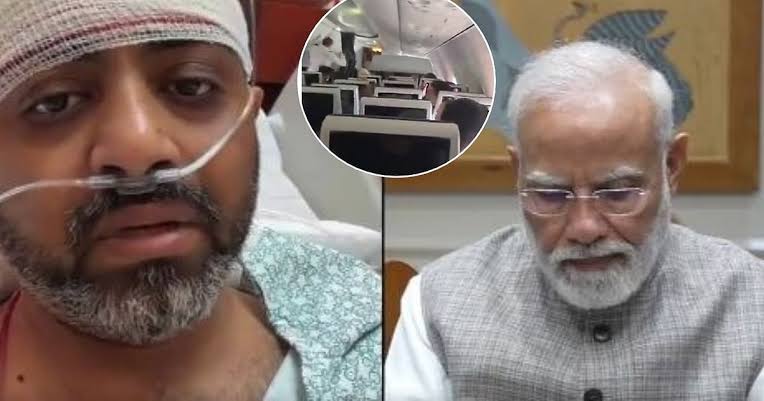
On September 30, 2026, Flydubai Flight FZ1073 was flying from Dubai to Tel Aviv with a large number of Israeli passengers on board. During the flight, the Omani co-pilot, Hamam al-Hammami, allegedly attacked the captain, Indian national Smit Machchhar, inside the cockpit. Reports said the co-pilot attempted to take control of the aircraft and crash it into Israel’s Ben Gurion Airport. The captain and passengers, with the help of other pilots on board, managed to prevent the disaster. The aircraft made an emergency landing in Tabuk, Saudi Arabia.
The incident raised serious questions about aviation security and the possibility of a terrorist attack. Israeli authorities deployed fighter jets as the aircraft approached Israeli airspace. Reports indicated that the possibility of shooting down the plane was considered if the situation demanded it. However, the precise orders given to the pilots and the circumstances under which such action might have been taken require further confirmation.
The idea of shooting down a passenger aircraft to protect a country from a potentially greater disaster raises a difficult question. Would a government be prepared to sacrifice the lives of its own citizens to prevent a catastrophe affecting thousands of others? If the aircraft had crashed into a major airport or a densely populated area, the consequences could have been devastating. At the same time, the decision to destroy an aircraft carrying innocent passengers would have carried an enormous human and moral cost.
The United States experienced the consequences of the September 11, 2001, terrorist attacks, when hijacked passenger aircraft were used as weapons. Israel, too, suffered a devastating attack on October 7, 2023, when Hamas-led militants attacked communities in southern Israel, killing about 1,200 people and taking around 250 hostages.
Israel has faced security threats since its establishment in 1948. Its leaders have repeatedly had to make difficult decisions in the face of threats to national security. The country’s response to such situations offers an opportunity to examine how governments balance the safety of the wider population against the lives of individuals who may be caught in a crisis.
Ninety Minutes at Entebbe
To understand Israel’s security thinking, it is useful to revisit the Entebbe hostage-rescue operation in Uganda in 1976.
On June 27, 1976, members of the Popular Front for the Liberation of Palestine–External Operations (PFLP-EO) and the German militant group Revolutionary Cells hijacked Air France Flight 139, which was travelling from Tel Aviv to Paris via Athens. The hijackers diverted the aircraft to Entebbe Airport in Uganda, where they received support from the government of then-President Idi Amin, a dictator notorious for political repression and killings.
The hijackers separated Israeli and Jewish passengers from the others and released many of the remaining passengers. They demanded the release of militants imprisoned in several countries and threatened the hostages if their demands were not met.
For Israel, the crisis presented a difficult choice. Negotiations could take time, and the lives of the hostages remained at risk. A military operation, on the other hand, could result in the deaths of the very people Israel wanted to save. The government had to consider both possibilities while preparing for an operation thousands of kilometres away from its territory.
Travelling 4,000 Kilometres for Operation Thunderbolt
In the early hours of July 4, 1976, Israeli commandos reached Entebbe Airport aboard four C-130 Hercules transport aircraft. The journey from Israel covered approximately 4,000 kilometres. The force had to operate in a country where the local government was hostile to Israel and the hostages were guarded by militants and Ugandan soldiers.
The commandos used a black Mercedes-Benz and Land Rovers during the approach to the old terminal building where the hostages were held. The vehicles were intended to resemble the presidential convoy associated with Idi Amin. The element of surprise was central to the operation.
The assault and evacuation were completed within a short period, commonly described as about 90 minutes for the overall operation. Israeli forces killed all seven hijackers present at Entebbe and several Ugandan soldiers. The commandos rescued more than 100 hostages, although three hostages were killed during the raid. A fourth hostage, Dora Bloch, who had been taken to a hospital in Kampala before the operation, was killed afterwards.
The Israeli commander, Lieutenant Colonel Yonatan Netanyahu, was also killed during the rescue. He was the elder brother of Benjamin Netanyahu, who later became Israel’s prime minister.
The Entebbe operation demonstrated Israel’s willingness to undertake a high-risk military mission far from home to rescue its citizens. It also showed that such operations could involve the loss of innocent lives despite careful planning and military preparation.
The two incidents—the reported threat to the Flydubai aircraft in 2026 and the Entebbe rescue operation in 1976—raise different but related questions about national security. In one situation, a government may face the possibility of sacrificing passengers to prevent a larger disaster. In the other, it may send soldiers into danger to save hostages.
Both situations underline a difficult reality: national security decisions are rarely free of human costs. The challenge for any government is to protect the country without losing sight of the value of individual lives.
News at a Glance:
https://www.cbsnews.com/news/israel-flydubai-plane-shoot-down-threat/
Social Media Pulse:
https://youtu.be/WcoJmN4U_DA?si=WCzUbF6LPpP3ts-E