
Migration to Europe: Lessons to learn
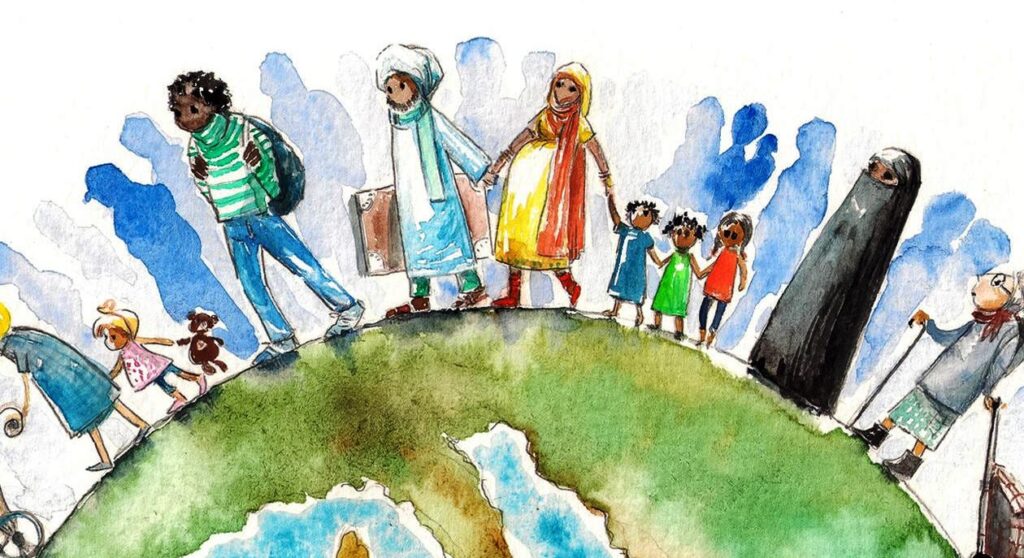
Migration is a problem world over. Sometimes its brain drain and some other times its labour drain. Thought both drains offered better services to the nation, which embraced these migrants, there are instances where the labour migration created certain problems and stress on infrastructure and security. Europe, which was in news for not so happy incidents, stands as testimony for problems with migration.
Analytical view/ analysis
Migration has an advantage as well as disadvantage. For instance, few decades ago United States of America (USA) has wholeheartedly welcomed the highly qualified engineers and scientists offering them huge packages to work in their companies and government organizations. That was a necessary. As the time passed by, the situation has changed and political equations took new turn. Now it was turn of Europe that welcomed people with hope that they would strengthen its economy. Rather, it is facing a typical problem of security, in some countries.
Many a times we have to learn lessons from others than experiencing ourselves. Let us see what their experience was:
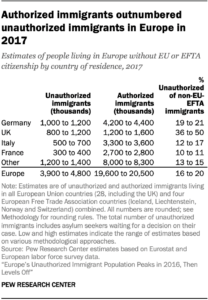
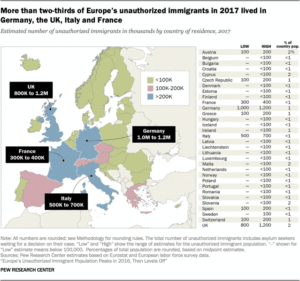
Migration has been taking place to Europe for two reasons. For many people in other countries the revenues are dipping and Europe is a favorable destination for comfortable living. According to a study by Pew, an international research center, in 2020 Europe had about 46 million Muslims, roughly 6% of its population, and that migration accounted for much of the increase since 2010. The EU as a whole received almost 6 million immigrants in 2024, including 4.2 million from outside the EU. Spain, Germany, Italy and France accounted for 57% of arrivals. First-time asylum applications then fell 27% in 2025 to 669,400, with Afghanistan and Syria among the largest origins, according to the European Commission.
Migration has helped European economies offset ageing and labour shortages, but rapid or geographically concentrated migration can create short-term pressures on housing, schools, healthcare, welfare systems and integration capacity.
Germany
Germany is one of Europe’s principal destinations for Muslim migrants. Pew estimated Muslims at about 7% of the population in 2020, up from roughly 6% in 2010. Germany had approximately 14.1 million foreign nationals at the end of 2025. Among them were about 936,000 Syrian nationals, 450,000 Afghans, 254,000 Iraqis and 1.52 million Turks.
At the end of 2025, Germany had 3.24 million people registered as seeking protection, including about 669,000 Syrians and 321,000 Afghans.
Germany has an ageing workforce and substantial labour shortages. Migrants increasingly fill jobs in healthcare, logistics, manufacturing, construction and services. Reuters reported in 2026 that approximately 316,000 Syrian nationals were working in Germany, most full-time and paying social-security contributions, although unemployment among Syrians remained considerably higher than the German average. The rapid refugee inflow after 2015 put considerable pressure on municipalities, accommodation, schools and integration services. Germany subsequently reinstated border controls and tightened asylum policy; in 2024 asylum applications fell by about one-third, according to the government said Reuters. Migration has become a major political issue, with the AfD’s growth partly reflecting concerns about irregular immigration and crime.
France
France has one of Europe’s largest Muslim populations. Pew estimates that approximately 9% of the population was Muslim in 2020, or roughly 6 million people. France had approximately 7.6 million immigrants in 2024, equivalent to 11.2% of its population; 34% had subsequently acquired French citizenship. Immigration supplies labour in construction, hospitality, healthcare, transport and other services. Pressure is especially visible in poorer urban suburbs, where housing, schools, transport and employment opportunities can be inadequate.
France has experienced particularly intense disputes over secularism (laïcité), headscarves, burqas, religious symbols in schools and the role of Islam in public life. Pew notes that several European states, including France, have restrictions on face coverings that disproportionately affect Muslim women. It has also witnessed terrorism by Islamist extremists, riots and tensions in some immigrant-heavy suburbs.
United Kingdom
The 2021 England and Wales Census counted 3.9 million Muslims, 6.5% of the population, up from 2.7 million in 2011, according to Office for National Statistics
The UK’s broader migration picture is much larger. In the year ending December 2025, there were 813,000 long-term immigrants, 642,000 emigrants and net migration of 171,000. Higher-paid migrants can make substantial positive fiscal contributions, while low-paid migrants or people arriving with substantial dependents can have a weaker or negative fiscal balance. Britain faces severe housing shortages, pressure on the NHS and school places, particularly in high-growth urban areas. Migration contributes to demand, but inadequate housebuilding and planning constraints are major parts of the issue.
Law and order issues include Islamist extremism, integration, religiously motivated hate crime and disputes over free speech.
Sweden
Sweden experienced one of Europe’s largest increases in Muslim population during the Syrian refugee crisis. Pew estimates Muslims reached 8% of the population in 2020, up four percentage points from 2010. However, asylum migration has now fallen dramatically. Sweden recorded its lowest asylum applications since 1985 in 2025, while total immigration excluding Ukrainians fell to about 79,700.
Migrants supply labour, but integration into employment has been uneven. At the same time, businesses complain that excessively restrictive migration policies are making it harder to recruit skilled workers. Reuters reported that migrant workers contributed an estimated 52 billion Swedish kronor to economic output in 2023.
Sweden’s gang violence is the clearest European case where migration and crime have become politically intertwined. Gang shootings rose sharply over the past two decades, with immigrant-heavy neighborhoods particularly affected.
Austria
Austria has a comparatively large Muslim population, with migration from Turkey and the Balkans followed by substantial Syrian and Afghan migration. Vienna and other cities have faced pressure on schools, housing and refugee accommodation. In 2025 Austria froze family reunification for people receiving asylum, arguing that government systems were at or beyond capacity. Security has become politically important following incidents involving Islamist extremism, including a 2025 stabbing attributed by authorities to a Syrian asylum seeker.
Belgium
Belgium’s Muslim population is concentrated particularly around Brussels and other large cities, with significant Moroccan and Turkish-origin communities.
The country’s most tangible recent problem has been reception capacity. Belgium received 39,615 asylum applications in 2024, 11.6% more than in 2023, while its accommodation capacity was approximately 35,600. This has contributed to political pressure for tighter border controls and restrictions on secondary migration within the Schengen area.
Italy
Italy has a different story. It is a major Mediterranean entry point. At the sametime, the ageing economy needing workers. Muslim migration has included large communities from North Africa, Bangladesh and other countries. Migrants provide labour in agriculture, construction, care work and hospitality, but irregular migration creates costs for reception, processing and municipalities.
Spain
Spain is currently one of Europe’s fastest-growing migration destinations. Eurostat recorded 1.289 million immigrants in 2024, the largest number of any EU country, according to European Commission
Spain has also pursued regularization. In 2026, 1.17 million undocumented migrants applied for legal status, with about 610,000 receiving temporary work permits, according to Reuters. The major infrastructure problem is housing. Reuters reports that Spain’s population has increased by roughly two million since 2020 and estimates a housing deficit of approximately 750,000 homes, potentially reaching one million by 2028.
Denmark
Denmark has deliberately pursued a much more restrictive migration policy. Recent asylum approvals have fallen dramatically; only 839 people had been granted asylum in the first 11 months of 2025. The principal recent applicant groups included Syrians, Afghans Eritreans and Somalis. Denmark’s approach includes tougher deportation rules, restrictions on religious face coverings and policies designed to prevent “parallel societies.”
Europe is ageing rapidly and has shrinking working-age populations. Migrants fill vacancies, pay taxes and social contributions, create businesses and help sustain sectors such as healthcare, construction, agriculture, hospitality and technology. An EU study covering 15 countries found that migrants were less of a fiscal burden than commonly assumed and in several countries made a net positive contribution, although outcomes varied considerably according to migrants’ employment, age and origin.
Conclusion:
All the European nations, which welcomed the migrants to fill the workforce, has faced one or other problem. In all countries, it was stress on economy and infrastructure, while some countries faced issues related to culture and religions related depending in the migrants’ native places. While accepting migrants from outside, India must be cautious keeping the experiences of Europe in the mind
News at a glance
Reuters — EU population and migration trends https://ec.europa.eu/eurostat/web/interactive-publications/demography-2026?etrans=bg&utm
Reuters — Germany, Syrian migrants and labour-market integration
Reuters — Spain’s migration regularisation and labour market
Reuters — Spain’s immigration and housing pressures
Reuters — Italy’s immigration and security policies
Eurostat — Migration and European demographic data
https://ec.europa.eu/eurostat/web/interactive-publications/demography-2026?etrans=bg&utm
European Commission — First-time asylum applications in 2025
By Numbers
Preliminary evidence, 2020–2025
| Year | Country / city | Incident | Muslim/migrant connection | Sharia / takeover element? | Law & order impact |
| 2020 | Dijon, France | Serious clashes involving Chechen groups and residents of North African origin | Participants included members of migrant-origin communities; the violence was primarily a local vendetta rather than a religious campaign | No reliable evidence of a Sharia demand or attempt to take over Dijon | Several days of violence; armed groups, police intervention and about 20 people injured were reported. |
| 2022 | Sweden – several cities | Riots following planned Qur’an-burning demonstrations by far-right activist Rasmus Paludan | Muslim communities participated in/formed part of the reaction; the initial provocation was an anti-Muslim demonstration | No evidence of a demand for Sharia or territorial takeover | Riots occurred in six cities, including Linköping and Norrköping, with police facing serious disorder. |
| 2022 | Leicester, UK | Hindu-Muslim community unrest | Tensions involved young men from British Muslim and British Hindu communities, many with Indian heritage | No established evidence of a Sharia/takeover campaign | Vandalism, assaults and attacks on religious sites led to an independent government review. |
| 2023 | France – nationwide | Rioting following the police shooting of Nahel Merzouk | Many participants were young French men of immigrant background, but French government research found most convicted participants were French nationals | No significant evidence that the riots were a Sharia movement | Major urban disorder, attacks on public buildings, looting and attacks on police. The Interior Ministry found that most convicted participants had no clearly expressed ideological or political motivation. |
| 2024 | Hamburg, Germany | Islamist demonstrations organised by Muslim Interaktiv | This is a much more directly relevant case: German authorities classify the organisation as Islamist and linked to the Hizb ut-Tahrir ideological milieu | Yes. Demonstrators displayed “Caliphate is the solution”; speakers expressed support for a caliphate and replacement of the existing political order | About 1,250 people attended the April demonstration and about 2,300 attended a May demonstration under heavy police restrictions. |
| 2024 | Solingen, Germany | Knife attack at a city festival | Suspect was a Syrian asylum seeker; German prosecutors alleged an Islamic State motivation | No evidence of a demand to impose Sharia on Solingen, but the alleged motive was Islamist | 3 killed and 10 wounded; the incident produced major debate about asylum, deportation and security policy. |
| 2024 | UK – Southport and other towns | Anti-immigration riots following the Southport murders | Important distinction: the riots were largely directed against Muslims, migrants and asylum seekers; they were not caused by Muslim migrants. False online claims said the attacker was a Muslim asylum seeker. | No | Disorder spread to more than 20 towns/cities; mosques and asylum accommodation were attacked. Later evidence established that the suspect was British-born and not an Islamist migrant. |
| 2025 | Villach, Austria | Knife attack | Suspect was a 23-year-old Syrian asylum seeker; Austrian authorities said he had pledged allegiance to Islamic State | No specific Sharia demand, but authorities described the act as Islamist terrorism | One 14-year-old was killed and five people wounded. The incident intensified debate over asylum and radicalisation. |
| 2025 | Munich, Germany | Vehicle attack on demonstrators | Suspect was an Afghan national; prosecutors said the attack may have been religiously motivated and intended to undermine Germany’s democratic order |
Social Media Pulse:
https://youtu.be/MN8fjAjLLpg?si=xUDFuT42m8q4KuCP
https://youtu.be/quR3shciSqM?si=KVJAbaP-vagtyuV9
https://www.instagram.com/p/DcrXFBCCFeL/?utm_source=ig_web_button_share_sheet