Resolution in the Kerala Legislative Assembly seeking the removal of the Chief Election Commissioner
Introductory Memo: The Kerala Legislative Assembly passed a resolution demanding the removal of Chief Election Commissioner Gyanesh Kumar, jointly moved by the ruling UDF and opposition LDF, with three BJP members opposing it. The resolution accused the Election Commission of losing its impartiality and credibility due to alleged irregularities in the Special Intensive Revision (SIR) of electoral rolls and called for reforming the appointment committee by including the Chief Justice of India in place of a Union minister. Experts argue that the controversy on SIR has become politicized, noting that electoral rolls are revised through state administrative machinery and that identifying unverified voters does not automatically mean they have been deprived of their voting rights.
Analytical view/ Analysis: First time in the history of India a state assembly passes a resolution to remove a Constitutional position, The CEC of India. The resolution by ruling front UDF was supported by the main opposition LDF and dissented by BJP.
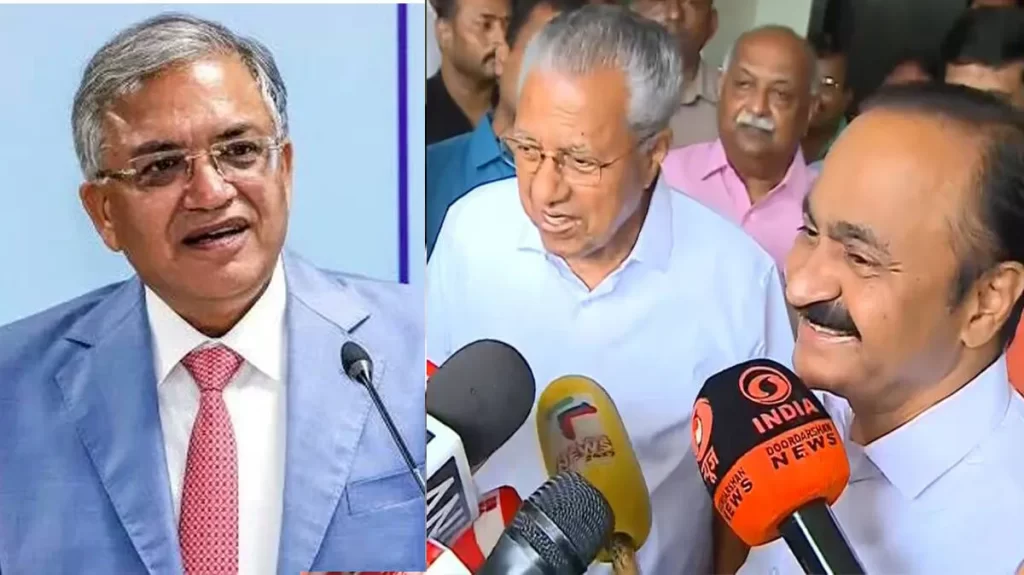
The Kerala Legislative Assembly passed a resolution demanding the removal of Chief Election Commissioner Gyanesh Kumar. Three BJP members opposed the resolution jointly moved by the ruling UDF and the main opposition LDF. Chief Minister V. D. Satheesan introduced the resolution under Rule 118.
The resolution alleged that the Election Commission, which is supposed to function impartially, had lost its credibility and neutrality. It also alleged that widespread irregularities had been introduced into the electoral rolls in the name of intensive voter revision, undermining their transparency and reliability. Widespread irregularities had taken place across the country in the name of SIR. The voting rights of millions of people entitled to vote had been taken away, while eligible voters had been excluded. The resolution alleged that the Election Commission, which should function with complete impartiality, was undermining democratic processes by losing its credibility and neutrality. It also demanded the restructuring of the committee that appoints the Election Commission. The resolution called for the inclusion of the Chief Justice of India in place of a Union minister, alongside the Prime Minister and the Leader of the Opposition in the Lok Sabha. This is the first time that a state legislative assembly in India has passed a resolution against the Election Commission. During the discussion on the matter, BJP legislative party leader B. B. Gopakumar said that if SIR was wrong, Chief Minister V. D. Satheesan, who came to power through it, should be the first to resign. Political observers point out that the claim that 13 crore voters were removed from the electoral rolls is baseless. They say the exercise has only involved identifying where those voters have moved.
The Special Intensive Revision (Special Intensive Revision – SIR) of electoral rolls is a process in which the Election Commission visits households in person to re verify the electoral rolls. Article 324 of the Constitution and Section 21(3) of the Representation of the People Act, 1950, empower the Commission to undertake this exercise. The Supreme Court upheld it in May, observing that the exercise helps achieve the constitutional objective of free and fair elections. The last such intensive revision was conducted in 2003. After more than two decades of migration and other changes, the electoral rolls had become outdated. This is the reason accepted by the Supreme Court. The figures released by the Election Commission itself explain this. Approximately 2.8 crore people were deceased, 6.3 crore had permanently changed their place of residence, and three crore could not be traced. It was also found that approximately one crore people had registered as voters in more than one place.
Most of these people are not deceased; likewise, no mass deletion exercise has been undertaken to remove voters. The electoral rolls have undergone only a continuous process of updating. A worker who moved from Bihar to Surat in search of employment a decade ago, a graduate who relocated from Lucknow to Bengaluru, and a woman who moved to another district after marriage – each of their names may appear on two electoral rolls. Alternatively, their names may still appear on the electoral roll of a town where they no longer reside. One person, one vote, one electoral roll. That is all this exercise amounts to.
The main point is that this is not a final deletion exercise at all. This widely circulated figure of 13 crore refers to the draft electoral rolls. In other words, this is a list of names that need to be re verified. Not a single name can be removed from the draft electoral roll without issuing a notice, conducting an inquiry, and giving the person concerned an opportunity to explain their side. The figures change as the draft rolls are converted into final rolls. In the 12 states and Union Territories covered in the second phase, the final electoral rolls contained approximately 1.4 crore more voters than the draft rolls. According to the Commission’s figures, approximately 2.37 crore voters aged between 18 and 28 have been newly added since the revision began.
According to the Election Commission’s figures, three crore people did not appear before Booth Level Officers. They have been classified as ‘absent’. That is, they could not be traced by the officials. Some may have moved elsewhere; however, they may not have informed anyone. Others may have been entitled to vote but were not at home on the day of verification. Alternatively, they may not have had the required documents with them. If eligible voters are being wrongly excluded from the electoral rolls, it would be in this category. The fact that the names of three crore people need to be verified and the claim that 13 crore Indians have been deprived of their voting rights are two different things. This correction of the electoral rolls is an ongoing process that the Central Election Commission carries out continuously without any hindrance. Experts point out that the campaign based on this is purely political.
Experts raise the question of how the Election Commission could identify only Modi supporters or opponents in a country with a population of 140 crore. Moreover, the Election Commission does not have its own machinery in the states for this purpose. The electoral rolls are updated and revised using the machinery of the respective states. Rathan Kelkar, who was Kerala’s Chief Electoral Officer, is now the Chief Minister’s secretary. Collectors function as Electoral Registration Officers under the Chief Electoral Officer. Even in a state like Kerala, where strong left-wing and right-wing political currents coexist, the electoral rolls have been revised in the same manner since 2003.
Reference
- https://indianexpress.com/article/india/kerala-assembly-election-commissioner-gyanesh-kumar-removal-resolution-10917164/
- https://economictimes.indiatimes.com/news/politics-and-nation/sir-kerala-assembly-passes-resolution-seeking-removal-of-cec-gyanesh-kumar/articleshow/134889368.cms?from=mdr
- https://thesouthfirst.com/keralam/the-right-to-vote-is-the-foundation-of-our-democracy-says-cm-vd-satheesan-assembly-passes-resolution-seeking-removal-of-chief-election-commissioner/
- https://www.indiatvnews.com/news/india/kerala-assembly-passes-resolution-seeking-cec-gyanesh-kumar-s-removal-2026-10-12-1056740
- https://www.thehindu.com/videos/watch-keralam-assembly-passes-resolution-for-gyanesh-kumars-removal-and-restoration-of-ecis-credibility/article71575146.ece/amp/
News at a Glance: Kerala assembly moved a resolution to replace the CEC and to include all the deleted voters. Resolution demanded to include the CJI in the collegiums to select the election commissioners
By the Numbers: Resolution approved in a voting of 137 against 3
Academic Insight: The usage of SIR in last Kerala election to delete bogus voters. It was even accepted by Home Minister Ramesh Chennithala and senior MLA Mathew Kuzhal nadan
Social Media Pulse: Pro and cons are viral
On Our Reading List: Mathrubhumi, Manorama, Indian express, Times of India, Deshabhimani, Janambhumi
Article by: G K Suresh Babu